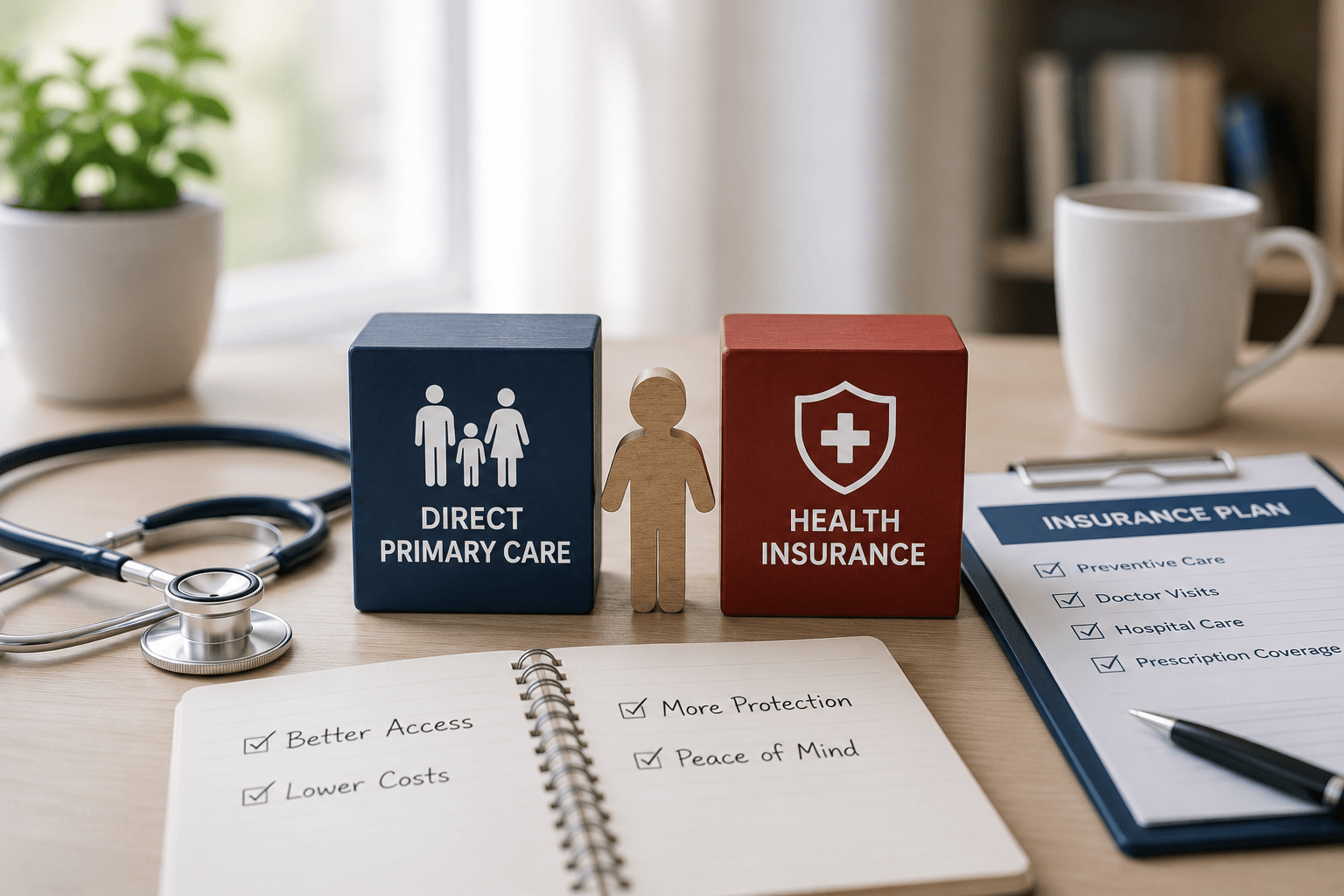
If you are researching ways to make healthcare more affordable and accessible, you may be comparing Direct Primary Care vs health insurance. Although both can play an important role in your healthcare, they are designed to do different things.
Direct Primary Care helps make routine primary care easier to access through a recurring membership. Health insurance helps protect you from the potentially high costs of hospital care, emergency treatment, surgery, specialists, and other major medical services.
For many individuals and families, the choice is not necessarily one or the other. Direct Primary Care and health insurance can often work together to provide convenient everyday care and broader financial protection.
At ICT Health Insurance, we help people understand how these options differ, compare available health insurance plans, and connect with trusted Direct Primary Care providers in Kansas.
What Is Direct Primary Care?
Direct Primary Care, often shortened to DPC, is a healthcare payment model in which patients pay a physician or medical practice directly through a monthly or annual membership fee. In exchange, the patient receives access to a defined range of primary care services.
The American Academy of Family Physicians describes Direct Primary Care as a model in which patients pay a physician or practice directly for a defined set of primary care services.
Services vary by practice, but a Direct Primary Care membership may include:
- Routine primary care visits
- Annual wellness exams
- Preventive care
- Sick visits
- Chronic condition management
- Same-day or next-day appointments
- Longer appointment times
- Telemedicine or video visits
- Direct communication with the care team
- Discounted laboratory testing or medications
The exact services, fees, appointment policies, and membership terms depend on the individual practice. Patients should always review a provider’s membership agreement before enrolling.
What Does Health Insurance Do?
Health insurance is designed to help pay for covered medical services and protect policyholders from large healthcare expenses. Depending on the plan, coverage may include preventive care, physician visits, hospital services, emergency care, specialist treatment, prescription drugs, diagnostic testing, and surgery.
Health insurance plans commonly include costs such as:
- Monthly premiums
- Deductibles
- Copayments
- Coinsurance
- Out-of-pocket maximums
The amount you pay and the services covered depend on the plan you select. Provider networks, prescription formularies, referral rules, and prior authorization requirements may also vary.
To explore available options, visit the ICT Health Insurance health insurance page.
Direct Primary Care vs Health Insurance
The main difference between Direct Primary Care and health insurance is the type of healthcare expense each is intended to address.
| Direct Primary Care | Health Insurance |
|---|---|
| Usually paid through a monthly or annual membership | Usually paid through a monthly premium |
| Primarily supports routine and preventive primary care | May cover primary care, specialists, hospitals, emergencies, and other covered services |
| Patients pay the practice directly | Claims are generally processed through an insurance carrier |
| May offer same-day appointments and direct physician communication | Access depends on the plan’s network and provider availability |
| Does not replace major medical coverage | Provides financial protection for covered major medical expenses |
Direct Primary Care is generally not considered health insurance. The Direct Primary Care Coalition also distinguishes DPC arrangements from health insurance for regulatory purposes.
What Direct Primary Care May Cover
A DPC membership is typically focused on services a primary care doctor can provide directly. Depending on the practice, this may include:
- Routine checkups
- Preventive screenings
- Minor illness and injury treatment
- Blood pressure or diabetes management
- Basic laboratory services
- Medication management
- Care coordination
- Virtual visits
Some practices may also negotiate lower prices for laboratory testing, imaging, or generic medications. These discounts are not guaranteed and differ among providers.
What Direct Primary Care Usually Does Not Cover
Direct Primary Care is not designed to cover every healthcare need. A membership generally does not replace coverage for services such as:
- Emergency room treatment
- Hospital stays
- Ambulance transportation
- Major surgery
- Cancer treatment
- Specialist care
- Advanced imaging
- High-cost prescription medications
- Rehabilitation or skilled nursing care
This is why it is important to understand the distinction between Direct Primary Care vs health insurance. DPC can improve access to everyday care, while health insurance can help protect against larger covered medical expenses.
Why Some People Choose Both
Many people use Direct Primary Care alongside a health insurance plan rather than treating DPC as a replacement for insurance.
In this arrangement, the Direct Primary Care membership handles many routine primary care needs. The health insurance plan remains available for covered services outside the DPC practice, including hospital care, emergencies, specialists, surgery, and other significant medical expenses.
This combination may appeal to people who want:
- More predictable primary care costs
- Faster access to routine appointments
- More time with their primary care provider
- Help managing chronic health conditions
- Protection against major medical expenses
The right arrangement depends on your health needs, budget, location, preferred doctors, medications, and available insurance plans.
Who May Benefit from Direct Primary Care?
Families
Parents may value having easier access to a primary care provider when a child becomes sick or needs routine care. Predictable membership fees may also make it easier to plan for primary care expenses.
Self-Employed Individuals
Self-employed workers often purchase their own health coverage and may appreciate the convenience of a DPC membership for routine care.
Small Business Owners
Some employers offer Direct Primary Care memberships as part of a broader employee benefits strategy. This may give employees more convenient access to primary care, although the membership should not be presented as a substitute for health insurance.
People Managing Chronic Conditions
Patients with conditions such as high blood pressure or diabetes may benefit from regular communication and follow-up with a primary care provider. Available services vary, so patients should confirm that a practice can meet their specific needs.
People Who Want Easier Access to Primary Care
DPC may appeal to people who have difficulty scheduling traditional primary care appointments or who prefer longer visits and direct communication with their doctor.
Direct Primary Care Providers in Kansas
ICT Health Insurance works with a growing network of Direct Primary Care providers in Wichita and other Kansas communities. You can review participating providers and learn more on our Direct Primary Care page.
Prairie Health & Wellness
Prairie Health & Wellness serves patients in Wichita, Kansas, and offers family medicine, women’s health, men’s health, pediatrics, and other primary care services.
Wichita Direct Primary Care
Wichita Direct Primary Care focuses on family medicine, preventive care, chronic disease management, and direct communication between patients and their care team.
Agape Healthcare
Located in Andover, Agape Healthcare provides family medicine with same-day or next-day appointment availability and access through phone, email, text, and video communication.
Atlas MD
Atlas MD serves patients in Wichita through a membership-based primary care model that emphasizes access, longer visits, and direct communication.
Evolve Healthcare
Evolve Healthcare is located in Wichita and offers primary care services through a membership-focused healthcare model.
Premonition Health
Premonition Health serves communities including Wichita, Derby, Bailey, and Colorado. Services and participating locations should be confirmed directly with the provider.
Cognitive Performance & Health
Cognitive Performance & Health is located in Wichita and combines primary care with an emphasis on preventive health and cognitive wellness.
Integrity Medicine
Integrity Medicine serves patients in Newton and Andover and provides Direct Primary Care services for individuals and families.
Antioch Med
Antioch Med is located in Wichita and offers primary care services through a membership-based model.
Erker Clinic
Erker Clinic is located in Goddard and provides relationship-based Direct Primary Care for individuals and families.
Provider participation, locations, fees, and services can change. Contact the practice directly or speak with ICT Health Insurance before making a decision.
Common Misunderstandings About Direct Primary Care
Direct Primary Care replaces health insurance
It generally does not. DPC focuses on primary care and does not usually cover large medical expenses such as hospitalization, emergency treatment, or major surgery.
Direct Primary Care and concierge medicine are always the same
The terms are sometimes used interchangeably, but the models can differ. Concierge practices may charge membership fees while still billing insurance. Many DPC practices instead use a direct membership model for defined primary care services.
Every DPC membership includes the same services
Services, fees, appointment access, prescription discounts, laboratory pricing, and cancellation policies vary by provider. Review the membership agreement carefully.
Having DPC means you will never need outside care
A primary care doctor can address many common healthcare needs, but patients may still require specialists, emergency treatment, hospital care, surgery, or advanced diagnostic services.
How to Compare Direct Primary Care Providers
Before selecting a DPC practice, consider asking:
- What is included in the membership fee?
- Are there enrollment or registration fees?
- Are visits unlimited?
- Are virtual visits included?
- How quickly are appointments usually available?
- Can patients contact the physician directly?
- Are laboratory tests included or discounted?
- Does the practice offer medication discounts?
- How are specialist referrals handled?
- What happens when the physician is unavailable?
- Can the membership be canceled at any time?
How to Compare Health Insurance Plans
When selecting health insurance to use alongside DPC, review more than the monthly premium. Important considerations include:
- Deductible
- Copayments and coinsurance
- Out-of-pocket maximum
- Hospital and specialist network
- Prescription drug coverage
- Emergency care benefits
- Referral requirements
- Coverage outside your local area
An insurance professional can help explain how these features affect your expected costs and access to care.
If you recently lost coverage or missed the annual enrollment deadline, read our guide to getting health insurance after Open Enrollment.
Frequently Asked Questions
What is Direct Primary Care?
Direct Primary Care is a healthcare model in which patients pay a physician or practice a recurring fee for access to a defined set of primary care services.
Is Direct Primary Care health insurance?
No. Direct Primary Care is generally not health insurance. It does not typically cover hospital stays, emergency care, major surgery, specialist treatment, or other major medical expenses.
Can I have Direct Primary Care and health insurance?
Yes. Many people use a Direct Primary Care membership for routine primary care while maintaining health insurance for covered hospital, emergency, specialist, and major medical services.
Does Direct Primary Care cover prescriptions?
Some DPC practices offer discounted generic medications or help patients locate lower-cost prescription options. Coverage and discounts vary by practice.
Does Direct Primary Care cover specialists?
Specialist treatment is generally not included in a DPC membership. A DPC physician may coordinate a referral, but the specialist’s charges would typically be paid through health insurance or directly by the patient.
Does Direct Primary Care cover emergency room visits?
No. Emergency room treatment is generally outside the scope of a Direct Primary Care membership.
How much does Direct Primary Care cost?
Membership fees vary by practice, location, age, and services included. Some practices also charge enrollment fees or separate fees for certain services.
Is Direct Primary Care available in Wichita?
Yes. ICT Health Insurance works with several Direct Primary Care providers in Wichita and nearby Kansas communities.
Is Direct Primary Care good for families?
It may be. Families may value predictable fees, convenient appointments, preventive care, and direct access to a primary care provider. The benefits depend on the family’s health needs and the services included by the practice.
Should I choose Direct Primary Care or health insurance?
They serve different purposes. Direct Primary Care supports routine primary care, while health insurance helps protect against larger covered medical expenses. Many people choose to use both.
Build a Healthcare Strategy That Fits Your Needs
Comparing Direct Primary Care vs health insurance does not have to result in an either-or decision. Direct Primary Care may make everyday medical care more accessible, while health insurance can provide broader protection against major covered healthcare expenses.
ICT Health Insurance can help you compare health insurance plans, understand how coverage may work with a DPC membership, and connect with participating Direct Primary Care providers in Kansas.
Explore Your Options
Speak with ICT Health Insurance about combining personalized primary care with health insurance coverage that fits your needs and budget.